
The wedding guest guide
How to plan a wedding guest list with clarity and kindness
A guest list sits at the meeting point of relationships, budget and venue capacity. A clear method helps you make difficult choices fairly while creating a welcoming experience for the people you invite.

Build the list
Create fair boundaries together
Start with capacity and relationships, not obligation.
Start with the real capacity
Use the lower of your venue limit and affordable guest number as the boundary. Capacity includes the couple, children where applicable and anyone the venue counts within catering or room limits.
A clear maximum turns vague pressure into a shared constraint. Keep a small operational margin until key family groups are mapped, rather than filling every place immediately.
Build both sides together
Each partner should create their essential, preferred and if-space-allows groups before combining them. Agree the rule for partners, children and family friends, then apply it consistently.
Equal numbers are not always equitable, especially when families differ in size. Aim for a list that feels jointly owned and reflects the relationships present in your lives now.
Respond to family pressure calmly
Listen to why a suggested person matters, but do not promise a place in the moment. Return to capacity, cost and the rules you agreed as a couple.
If parents are contributing, discuss guest expectations openly rather than treating them as implied. Kind boundaries are easier to accept when they are early, consistent and explained without blame.
Invite with care
Make communication clear and consistent
Give guests the information they need at the right time.
Organise households and invitations
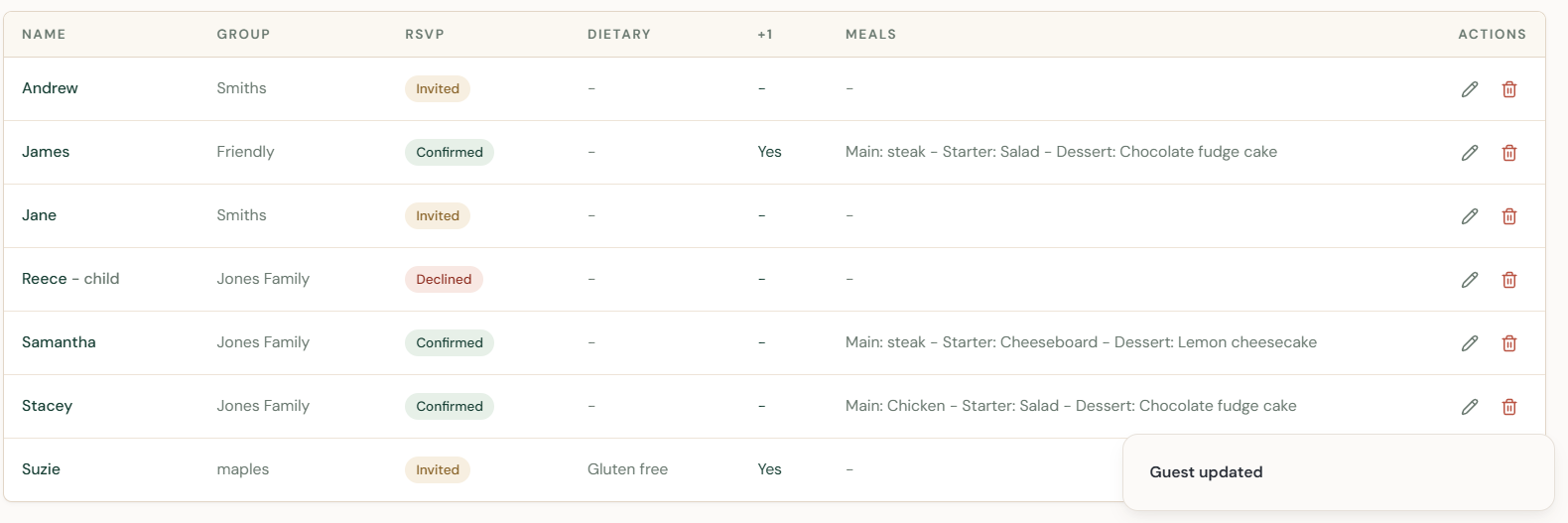
Record names as guests would like them addressed, group couples and families correctly and confirm postal or email details. Be explicit about who is included rather than relying on an envelope to communicate it.
Decide your approach to plus-ones and children before invitations go out. Consistency reduces awkward conversations and prevents reception numbers drifting beyond the plan.
Make RSVPs simple to answer
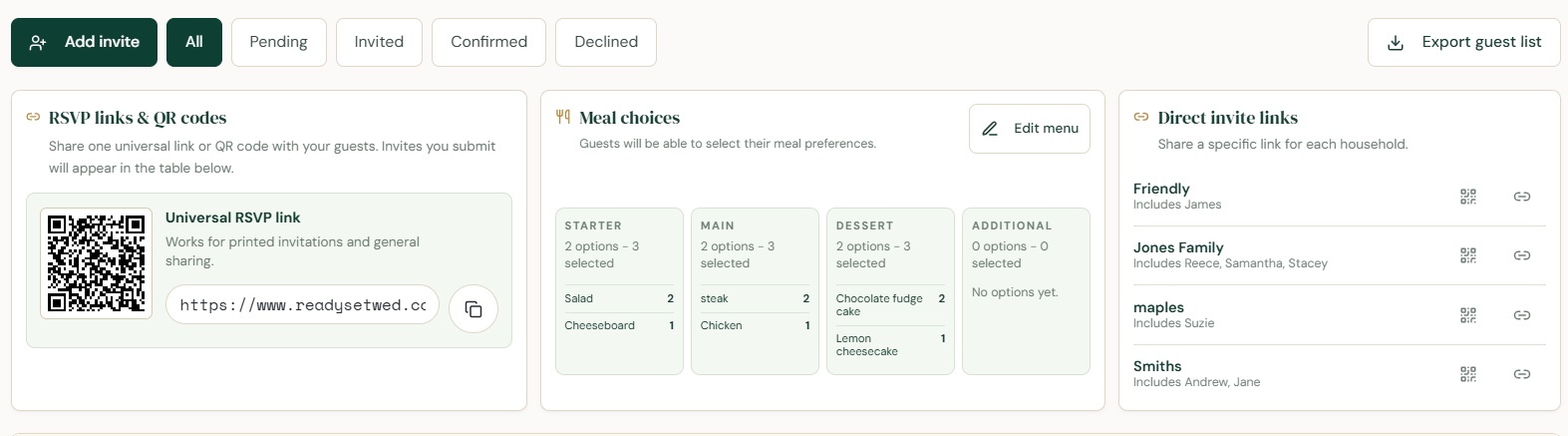
Set a deadline that leaves time for catering, seating and follow-up. Ask only for details you will use: attendance, meal choices, dietary needs, accessibility requirements and perhaps transport.
Track responses centrally and follow up personally after the deadline. People forget, invitations go astray and plans change; a warm reminder is usually more effective than assuming silence means no.
Plan the experience around real needs
Review mobility, sensory needs, allergies, babies, older guests and travel arrangements with your venue. Small choices such as seating position, step-free routes and clear signage can make a substantial difference.
Share practical information without singling anyone out publicly. Where a need affects catering or access, confirm the arrangement with the relevant supplier and the guest before the day.
Welcome everyone
Turn guest details into genuine hospitality
Use what you learn to make the day more comfortable.
Prepare for late changes
Keep a clear record of declines, substitutions that are genuinely allowed and the final date for changes. Do not maintain a visible ranked reserve list that could make people feel secondary.
When somebody cancels, consider whether inviting another person late would feel thoughtful or transactional. It is also acceptable to keep the place empty and enjoy the additional space or budget.
Keep in mind
Leave breathing room in the plan
The best plan supports the celebration rather than controlling it. Keep decisions visible, review them together and allow space for real life to change the details.
Bring the plan together
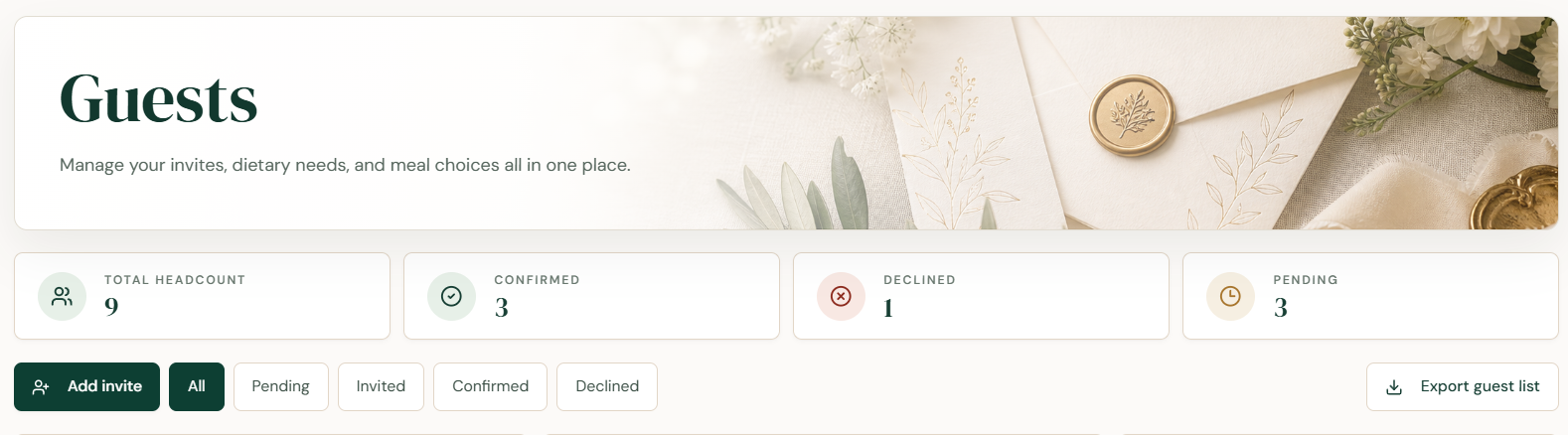
See the whole picture in ReadySetWed
Turn guidance into a shared, practical plan, with the important details connected and easy for both of you to understand.
Plan with clarity
Keep what matters at the centre of every decision.
ReadySetWed brings your plans, people and spending together in one calm, shared place.