
The seating plan guide
How to create a wedding seating plan that feels effortless
A good seating plan quietly supports conversation, comfort and the rhythm of the reception. Start with practical constraints, then arrange people with empathy rather than chasing a mythical perfect layout.

Set the room
Begin with the venue’s real layout
Good seating starts with accurate capacity and service space.
Confirm the room before arranging guests
Ask the venue for an accurate floor plan, available table shapes, safe capacity and required service routes. Include the couple’s table, entertainment, cake, gifts and accessibility space.
A layout that works on paper can feel cramped once chairs are occupied. Respect the venue’s operational advice and understand which tables or furniture are fixed.
Choose a table style that suits the celebration
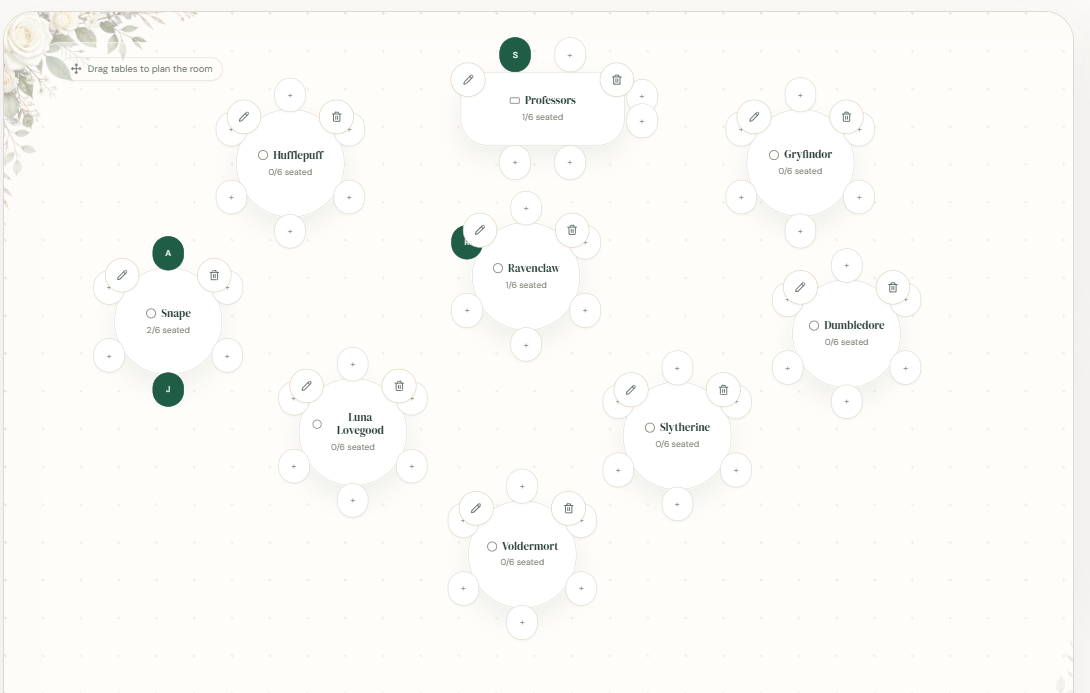
Round tables encourage conversation across the group, while long tables create a connected, banquet-like atmosphere. Neither is inherently better; the room, service style and guest mix should lead.
Decide whether you want a top table, sweetheart table or to sit among guests. Think about sightlines and movement as well as tradition.
Work from the confirmed guest list
Wait until most responses and meal details are known before creating the final arrangement, but group likely tables earlier. Note households, ages, access needs and highchairs.
Keep useful information beside each guest so the layout supports service rather than becoming a separate decorative exercise.
Arrange the people
Create tables where conversation can flow
Balance familiar faces with opportunities to connect.
Shape tables around comfortable conversation
Give each guest at least one familiar connection and consider shared interests, ages and energy. Avoid putting all quiet guests together or asking one outgoing person to carry an entire table.
You do not need to keep every friendship group intact. Splitting a large group thoughtfully can create balanced tables while still leaving familiar faces nearby.
Handle family dynamics discreetly
Use distance, sightlines and table position to reduce known tensions without turning the room into a map of conflict. Ask trusted family members only when their insight is genuinely useful.
Focus on comfort rather than symbolism. Two people can both be important without being seated together, and a modern arrangement does not need to replicate a traditional hierarchy.
Check the plan with the venue and caterer
Share table numbers, guest names, meal choices, allergies, children’s meals and supplier requirements in the format requested. Confirm who needs printed copies and when.
Keep a simple version for guests and a detailed operational version for staff. Personal or medical information should only be shared where necessary.
Make it work
Confirm every practical detail
Give the final plan enough flexibility for change.
Design for last-minute changes
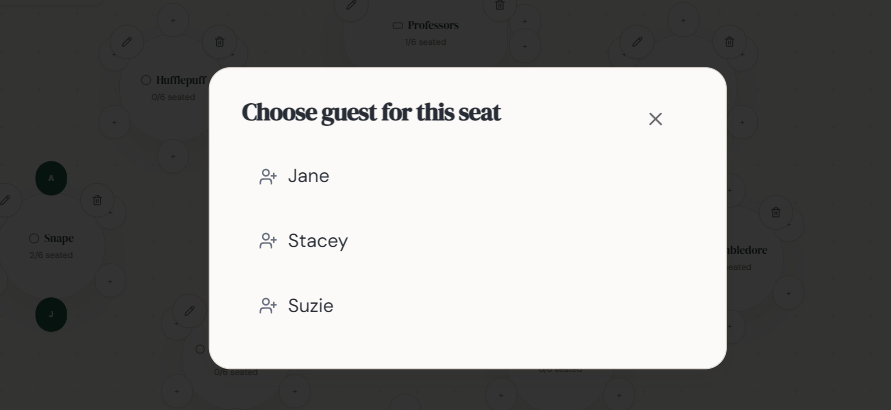
Avoid printing the final display too early. Keep one or two flexible positions and know how you will update place cards if illness or travel causes a cancellation.
After the venue deadline, route changes through one named contact. On the wedding day, let the coordinator solve small gaps so you can remain present.
Keep in mind
Leave breathing room in the plan
The best plan supports the celebration rather than controlling it. Keep decisions visible, review them together and allow space for real life to change the details.
Bring the plan together
See the whole picture in ReadySetWed
Turn guidance into a shared, practical plan, with the important details connected and easy for both of you to understand.
Plan with clarity
Keep what matters at the centre of every decision.
ReadySetWed brings your plans, people and spending together in one calm, shared place.